 86673 18 234
 jspestservices@gmail.com
EXPERT HONEYBEE CONTROL
Honey bees are not typically aggressive, and they generally do not bite unless they feel threatened. However, they can sting in defense, and their stings can cause discomfort and allergic reactions in some people. Here are some key points about honey bee stings:
Stinging Behavior: Honey bees sting as a defensive mechanism to protect their colony. When a bee stings, it releases venom that causes pain and inflammation.
Allergic Reactions: Some individuals may experience allergic reactions to bee stings, ranging from mild swelling and itching to severe symptoms such as difficulty breathing and anaphylaxis. Allergic reactions require immediate medical attention.
HONEY BEE
Honey bees are social insects known for their role in pollination and honey production. They live in colonies with a queen, worker bees, and drones. Worker bees collect nectar and pollen from flowers to produce honey. Honey bee populations face threats from habitat loss, pesticides, and diseases. Their pollination services are vital for agriculture and ecosystem health.
HOW TO MANAGE HONEYBEE INFESTATIONS
Managing honeybee infestations requires careful handling because bees are essential pollinators, and many species are protected. The goal should always be to relocate the bees rather than exterminating them. Here’s how you can manage a honeybee infestation responsibly:
IDENTIFY THE INFESTATION
Look for Signs: Bees flying in and out of a specific area, a constant hum, or visible honeycomb inside walls, attics, or on trees.
Confirm They’re Honeybees: Honeybees are usually golden brown with black stripes. If they are not honeybees, they might be wasps or hornets, which require different handling.
CONTACT A OUR PEST CONTROL
- Contact a our pest control to relocate the hive. They can extract the bees safely without harming them.
- Our pest control services specialize in live bee removal. Ensure they use bee-friendly techniques.
HIVE REMOVEL PROCESS
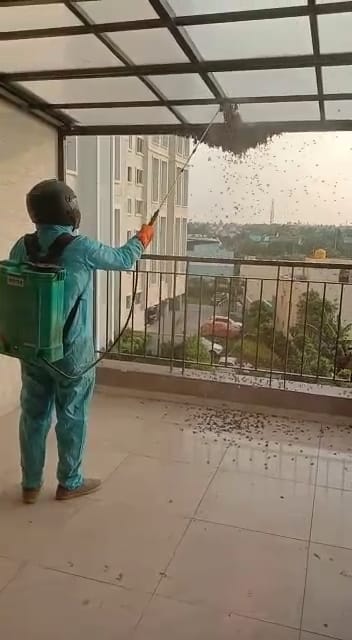
Live Bee Removal: Our pest control will typically use spray the chemicals to the bees and then carefully remove the hive.
Clean the Area: After removal, thoroughly clean the area where the hive was located. Bees are attracted to residual honey and wax, so cleaning the space will help prevent new colonies from forming.
Repair Structural Damage: If the bees were inside walls or attics, repair any damage caused by the hive or the removal process.